Dental Sleep Medicine
Snoring Does not Have to be!
60% of all men and 40% of all women over 60 snore. Among 30-year-olds, it is only 10% of men and 5% of women.
The person affected often does not notice their snoring at all — but suffers from the consequences such as dry mouth, hoarseness, and sore throat. However, the partners usually feel more disturbed by the snoring noises. Therefore, a solution must be sought together. Dentists can help you!

Dr. Marco Georgi M.Sc.
…is certified according to the criteria of the German Society of Dental Sleep Medicine (DGZS).
Snoring
… is caused by fluttering and oscillation of muscles and soft tissues in the narrowed throat. Because the muscles relax during sleep, the lower jaw with the tongue falls backwards and thus narrows the airway. Low tissue tension and being overweight can have a reinforcing effect. This is why snoring problems increase significantly with age.
Breathing interruptions – sleep apnea
This sleep disorder involves breathing interruptions lasting longer than 10 seconds. The result is an inadequate supply of oxygen throughout the bloodstream – including in the brain.
Unnoticed, this triggers constantly recurring wake-up reactions. A restful deep sleep is no longer possible. Performance the next day is severely limited.
Sleep apnea can have serious effects:
- High blood pressure, cardiac arrhythmia, increased risk of heart attack
- Increased risk of stroke
- Microsleep while driving and at work
- Depression and listlessness
- Disturbed sexuality
In short: The quality of life is restricted and life expectancy is reduced.
The “Snoring Splint”
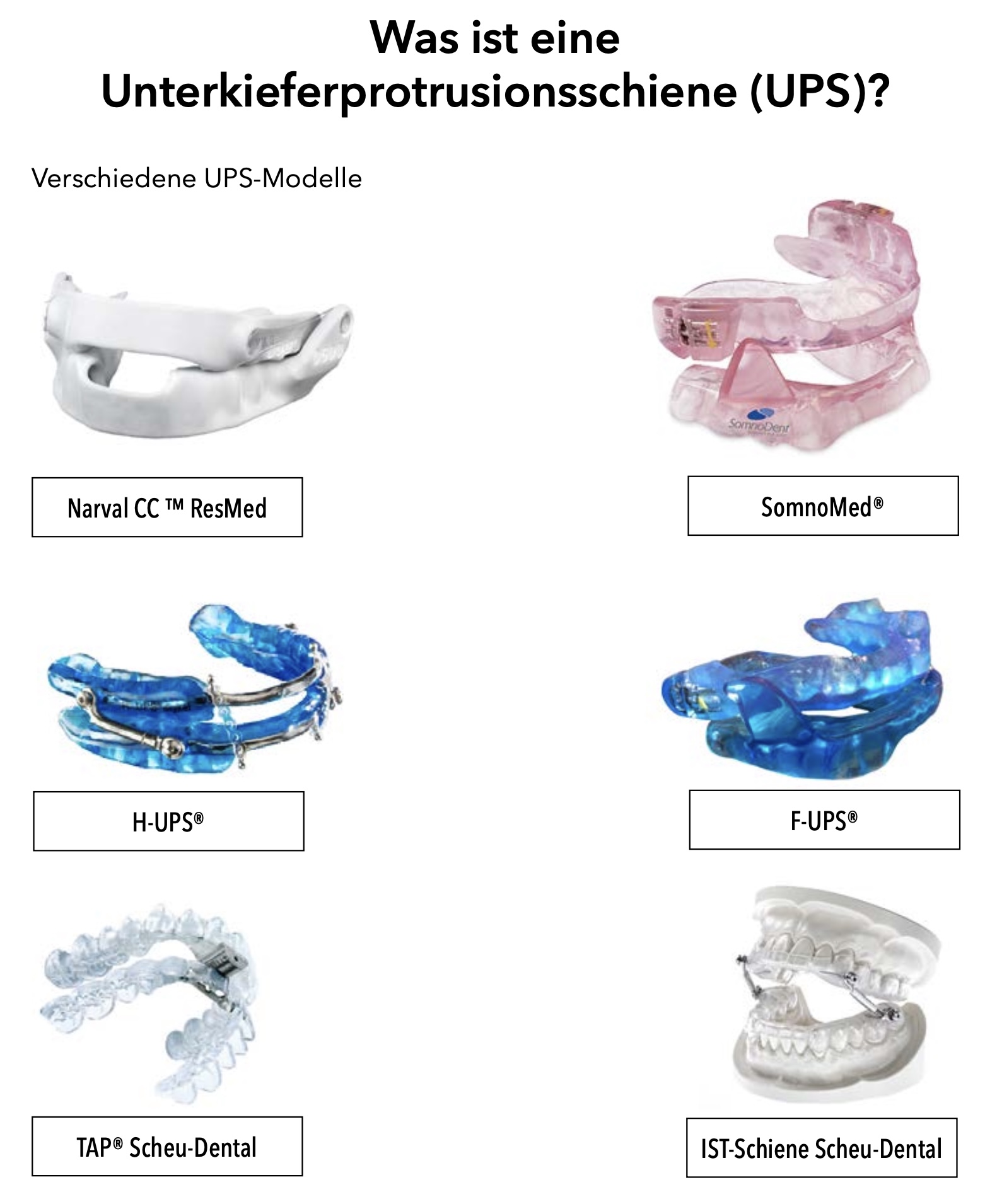
Disturbing snoring and mild to moderate sleep apnea can be treated with dental splints, similar to braces or a sports mouthguard.
The two-part dental splints, manufactured according to dental impressions, hold the lower jaw, tongue and soft palate forward during sleep. This keeps the throat wide open, the flaccid throat muscles are stabilized and the lungs are supplied with enough air again to sufficiently saturate the blood with oxygen.
These mandibular advancement splints can be adjusted via special connecting elements between the upper and lower jaw splint so that the alarming wake-up reactions do not occur — and your partner and you can sleep more peacefully and restfully at night. The splints are fitted in the practice at Kureck by a specialized dentist who works together with sleep medicine specialists.